

Have you ever wondered what makes a pergola truly adaptable to changing weather throughout the day? The answer often lies in a single word: louvered. While many outdoor structures offer either open-air exposure or solid coverage, a Louvered Pergola introduces a completely different approach—one rooted in an architectural concept that has been refined over centuries. Understanding what “louvered” actually means is the first step toward appreciating how modern outdoor spaces, with solutions from Light Hunter, can become more functional, comfortable, and responsive to our daily needs.
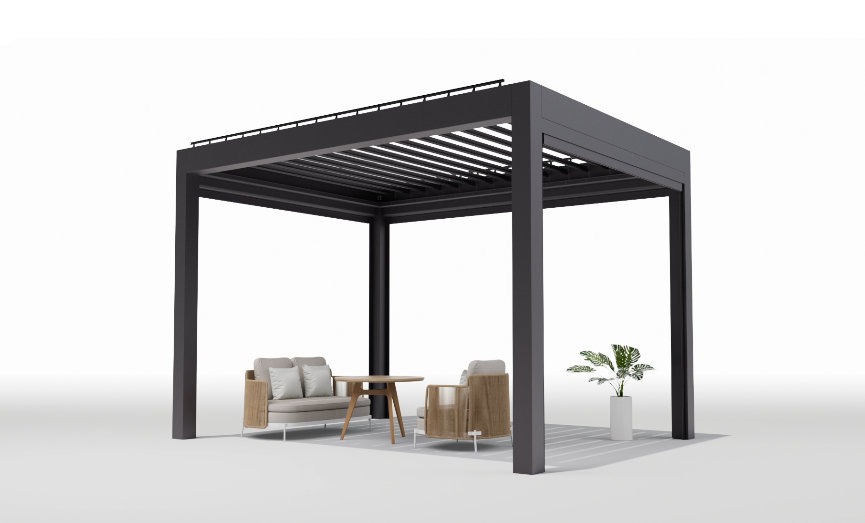
The Definition of Louvered: More Than Just Slats
At its most basic level, the term “louvered” refers to a design featuring a series of parallel horizontal slats or blades that can be angled to regulate light, air, and moisture. Think of the adjustable blinds on a window—those horizontal slats that you can tilt to let in more or less sunlight. A louvered pergola applies this same principle to an outdoor roof structure. Instead of fixed beams or a solid canopy, the roof consists of multiple slats—called louvers—that rotate along their axis.
What makes this design so effective is the ability to control the angle of these slats. When the louvers are open, they allow natural light and fresh air to filter through, creating a bright, ventilated space beneath. When they are fully closed, the slats interlock to form a solid surface that blocks sunlight and sheds rainwater. This dual functionality is what sets a louvered pergola apart from traditional open-beam structures or fixed-roof pavilions.
How Louvered Roofs Actually Work
The operation of a louvered roof is surprisingly straightforward yet highly effective. The louvers are connected to a mechanical system that allows them to pivot in unison, much like the blades of a window blind. This control mechanism can be manual—operated by a hand crank or lever—or motorized, using a remote control, wall switch, or even a mobile app. In more advanced systems, the louvers can be integrated with smart sensors that respond automatically to changing weather conditions.
When the louvers are tilted to an open position, gaps appear between each slat, allowing sunlight and airflow to pass through. This creates a comfortable microclimate underneath—perfect for enjoying a warm afternoon without being fully exposed to harsh UV rays. Conversely, when the louvers rotate to a closed position, the edges of each slat overlap, creating a sealed surface. Many louvered pergolas feature integrated gutter systems that channel rainwater away through concealed channels in the support posts, keeping the area underneath completely dry. This means you can enjoy your outdoor space not just on sunny days, but during unexpected rain showers as well.
Louvered vs. Traditional: A Fundamental Difference
To truly appreciate what “louvered” brings to outdoor design, it helps to compare it with more familiar structures. A traditional pergola features an open roof made of interlocking beams that form a horizontal lattice. This design allows sunlight to filter through in a beautiful, dappled pattern, but it offers no protection from rain or intense midday sun. A solid patio cover, on the other hand, provides full shade and waterproofing but blocks out all natural light and ventilation.
A louvered pergola occupies the middle ground—and then some. It gives you the flexibility to create an open, semi-shaded, or fully closed roof at any given moment. In the morning, you might open the louvers wide to let in the gentle warmth of the rising sun. By midday, you can angle them to block harsh rays while still enjoying fresh air. And if rain clouds roll in, a simple adjustment seals the roof effectively. This adaptability is the defining advantage of louvered design, transforming a static structure into a dynamic, responsive living space.
Smart Sensors and All-Weather Comfort
One of the most exciting developments in louvered pergola technology is the integration of smart sensors that automate the entire experience. Instead of manually adjusting the louvers every time the weather changes, modern systems can do it for you. Weather sensors that measure sun intensity, wind speed, and rainfall can trigger pre-programmed behaviors without any user input.
For instance, when the sun sensor detects intense UV radiation, the louvers can automatically tilt to provide optimal shade while still allowing airflow. If the wind sensor registers gusts exceeding a safe threshold, the system can close the louvers to protect the structure from damage. And when rain is detected, the louvers close automatically, keeping the space beneath dry and comfortable. This level of automation makes your pergola a comfortable, usable extension of your home from sunrise to sunset, regardless of what the weather throws at it.
The Solar Evolution: Louvered Meets Renewable Energy
The louvered concept has evolved even further with the introduction of solar technology. A solar pergola takes the adjustable louvered roof and integrates photovoltaic panels directly into the slats. This means the same louvers that provide shade and rain protection can also generate clean electricity for your home. The photovoltaic louvers convert sunlight into usable power while maintaining their adjustable functionality—you still control light and airflow, but now you’re also capturing renewable energy in the process.
At Light Hunter, we’ve embraced this innovation with our Solar Pergola, a structure designed to integrate clean energy generation directly into the rooftop louvers. The system operates within Germany’s 800W small-scale PV category, making it accessible for many households without complex approval procedures. Our solar pergola combines photovoltaic louvers with motorized control and rain-sensing automation, allowing users to enjoy shade, comfort, and renewable energy all from a single, minimalist structure. We’ve focused on creating a design that blends seamlessly into modern architecture while delivering real, everyday functionality.
Choosing the Right Louvered Solution
When considering a louvered pergola for your outdoor space, several factors come into play. Material choice is important—aluminum is widely preferred for its durability, corrosion resistance, and low maintenance requirements. Look for systems with integrated drainage to ensure effective water management when the louvers are closed. Consider whether manual or motorized operation better suits your needs, and think about whether smart sensor integration would enhance your experience.
Beyond the technical specifications, think about how you want to use the space. Do you envision a dining area that remains usable even during light rain? A lounge spot that transitions from sun-drenched to shaded throughout the day? A garden retreat that stays comfortable from morning to evening? The beauty of a louvered pergola lies in its ability to adapt to all these scenarios and more.
Conclusion
Understanding what “louvered” means opens up a new way of thinking about outdoor living. It’s not just about slats and angles—it’s about control, adaptability, and making the most of your space in every season. From the basic principle of adjustable horizontal blades to the sophisticated integration of smart sensors and solar technology, the louvered concept has evolved into a cornerstone of modern outdoor design.
Whether you’re exploring a pergola for your backyard, considering a solar pergola to combine shade with energy generation, or looking into advanced Louvered Pergolas with automated features, the core idea remains the same: giving you the power to shape your environment exactly as you need it, whenever you need it. If you’re ready to explore what a louvered solution could do for your outdoor space, we invite you to Contact Us to learn more about the possibilities.